British Army purchase-of-discharge system
Far from the Madding CrowdThe British Army purchase-of-discharge system is the means by which Sergeant Troy leaves military service after paying for his discharge. Its importance in the novel lies not in a detailed account of military regulations, which the narrative does not provide, but in the personal and economic consequences attached to Troy’s departure from the Eleventh Dragoon Guards: he trades a formal military role for life on Bathsheba’s farm, with the cost borne by his wife.
Definition and Evidence
The novel names the arrangement when Troy tells the farm’s workers that he has purchased his discharge from the 11th Dragoon Guards. He presents the departure as a change of duty: he will attend to new responsibilities at the farm, while retaining the spirit and feeling of a soldier. The evidence establishes that payment enables his exit from the regiment; it does not specify the price, administrative steps, or broader rules of eligibility.
From Soldier to Farmer
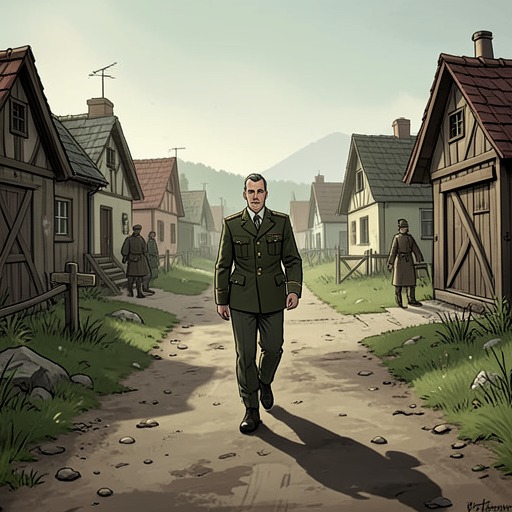
Troy’s discharge is followed by his visible participation in the farm’s social and working life. At the harvest supper, he leads Bathsheba into a dance in the barn and announces their marriage to the assembled workers. Later, on the road between Casterbridge and Weatherbury, he is described as gradually turning himself into a farmer of a modern and spirited sort. The retained moustache and military bearing mean that people continue to call him Sergeant, even though he has left the army. The discharge thus changes his occupation without immediately erasing the public signs of his former identity.
Payment and Marital Consequences
The economic consequence becomes explicit when Troy recounts his horse-racing losses to Bathsheba: he says that he bought his discharge with her money. This detail places the military transaction within the wider imbalance of their marriage, in which Bathsheba’s resources support a husband whose decisions endanger the farm’s security. Her fears about the legal effects of marriage on her tenancy and the prospect of poverty if the farm is lost make the financial stakes particularly serious. The discharge is therefore not simply a private release from service; its cost connects Troy’s change of status to Bathsheba’s property and livelihood.
Narrative Significance
The system links military life, money, marriage, and agricultural responsibility without resolving those domains into one stable identity. Troy can leave the regiment, but the habits and appearance of the soldier remain; he can claim new duties on the farm, yet the money for his transition comes from Bathsheba. By making his discharge both a practical change and a financially consequential marital act, the narrative shows how a formal institution can carry effects into household and rural life beyond the army itself.